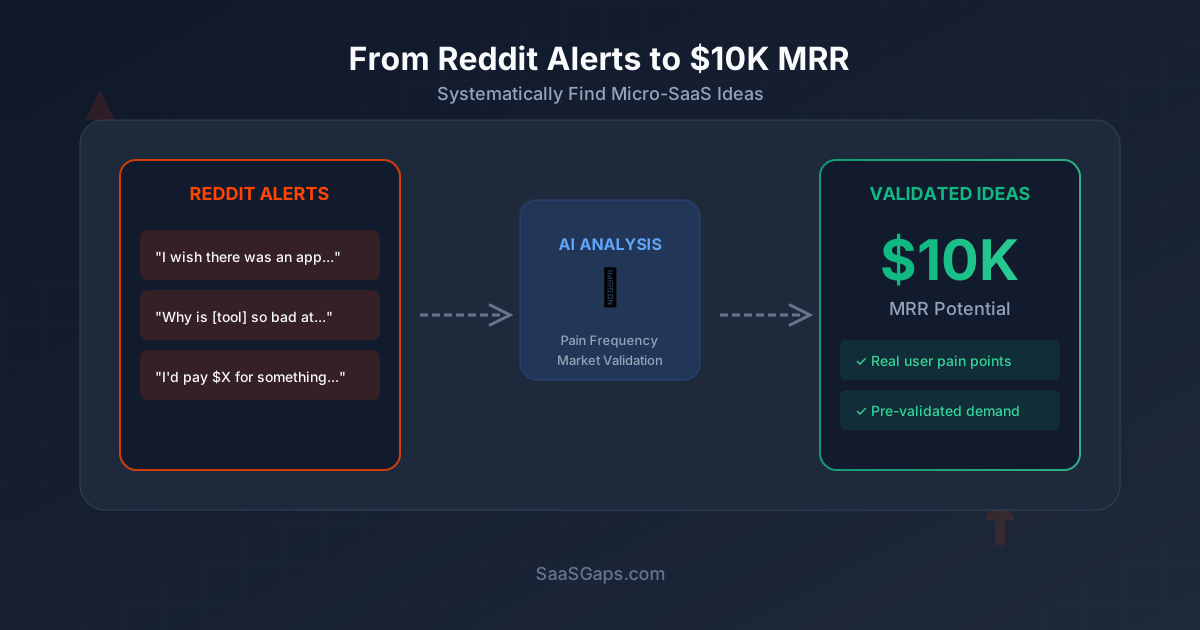
Reddit Alerts: Set Up Keyword Alerts to Find Micro-SaaS Ideas
Set up Reddit keyword alerts (F5Bot/RSS), track "I wish there was an app that..." posts, and turn recurring pain points into validated micro-SaaS ideas.
Stop guessing what to build. The most successful indie hackers don't sit around waiting for inspiration to strike. They systematically mine social platforms for pain pointsreal problems that real users are complaining about and willing to pay to solve.
Over the past few months, I've studied indie founders who consistently find winning ideas. The pattern is clear: they're not inventing problems, they're discovering them. Reddit has become their favorite hunting ground.

This isn't theoretical. Mattia recently shared on X that his product Sleek crossed $10K MRR within one month of launchzero ad spend, completely bootstrapped. Another founder, Rob Hallam, documented his journey from quitting his job to hitting $10K/month in SaaS revenue within 10 months. The common thread? Both started by listening to what people were complaining about online.
Let me walk you through exactly how this works.
Why Reddit Is a Goldmine for SaaS Ideas
Reddit is different from other social platforms. People go there to vent, ask questions, and seek helpoften with brutal honesty. When someone posts "I wish there was an app that did X" on Reddit, they mean it. There's no performative element like on Instagram or LinkedIn.
The platform hosts over 50 million daily active users across more than 100,000 communities. Each subreddit represents a concentrated audience with specific problems. Small business owners in r/smallbusiness complain about invoicing. Designers in r/freelance vent about client management. Marketing professionals in r/marketing debate which tools actually work.
This creates an unprecedented opportunity. You can eavesdrop on real conversations from your target customers before you've built anything. The validation happens before the product exists.
One user on r/SaaS explained the methodology perfectly: "Start with a few searches like 'I wish there was an app for' or 'alternative to [popular tool]' or 'biggest problem with [industry/process]'. Look through specific subreddits related to industries you're familiar with. Look for rant posts or feature requests. See what pain points keep coming up."
The advice sounds simple, but most aspiring founders skip this step entirely. They assume they already know what people want. That assumption kills products before they launch.
Setting Up Your Alert System
The first step is creating a listening infrastructure. You want to catch relevant complaints as they happen, not spend hours manually scrolling through Reddit.
There are several approaches depending on your technical level and budget.
The free approach involves Reddit's native search and RSS feeds. You can create search URLs for specific phrases and use third-party tools to convert them into RSS feeds. Set these up in an RSS reader like Feedly, and you'll see new matching posts each day. The downside is missing comments, which often contain the richest pain point data.
The intermediate approach uses tools like F5Bot, which sends email alerts when your keywords appear on Reddit. It's free and catches both posts and comments. You can set up multiple keyword combinations and receive daily digests. This works well for most indie hackers starting out.
The advanced approach involves building custom scrapers or using APIs like Pushshift (now with some restrictions) to capture data more comprehensively. Some founders combine this with AI to automatically categorize and score opportunities. This is overkill for most people, but if you're technical and serious about idea discovery, it can reveal patterns you'd otherwise miss.
Whatever approach you choose, the key is consistency. Set it up once and let opportunities come to you.
Search Phrases That Actually Work
Not all complaints are equal. Some are just venting. Others signal genuine willingness to pay for a solution. Learning to distinguish between them is the core skill of idea mining.
Here are search phrases that consistently surface buildable opportunities:
"I wish there was" catches people actively imagining solutions. When someone writes "I wish there was a tool that automatically scheduled my social posts based on when my audience is most active," they're describing a product spec. That's gold.
"alternative to" reveals dissatisfaction with existing solutions. Someone looking for alternatives is already paying for somethingthey just hate it. That's validated demand with proven willingness to pay.
"I'd pay for" is as explicit as it gets. Someone is directly telling you they would exchange money for a solution. Track these religiously.
"biggest problem with" surfaces frustrations with specific industries or tools. The replies often contain detailed workflow descriptions of what's broken.
"why is [tool] so bad at" exposes weaknesses in existing products. These complaints are feature requests in disguise.
"just spent X hours" reveals time-consuming manual processes. Any task that takes hours and happens repeatedly is a candidate for automation.
The r/SaaS community has compiled variations of these phrases over the years. One popular post also suggests searching for "hate when," "frustrated with," and "anyone else struggle with." The exact wording matters less than the intentyou're looking for expressions of genuine pain.
Which Subreddits to Monitor
Casting too wide a net creates noise. Too narrow and you miss opportunities. The sweet spot depends on what type of product you want to build.
For B2B SaaS ideas, these communities consistently produce quality complaints:
r/SaaS itself is meta but useful. People building SaaS products discuss what they wish existed, what competitors get wrong, and what tools they've tried and abandoned.
r/startups and r/Entrepreneur attract founders at various stages. Their questions span technical to operational to marketing. Many posts explicitly ask for tool recommendations, which is an invitation to learn what's missing.
r/smallbusiness is a goldmine for unglamorous but profitable opportunities. These aren't tech-savvy foundersthey're plumbers, dentists, and restaurant owners struggling with software that wasn't designed for them.
r/freelance covers an underserved market. Freelancers need tools for proposals, contracts, time tracking, invoicing, and client management. They complain loudly and switch products frequently.
r/marketing and r/PPC gather people who manage ad budgets. They have money and willingness to spend on tools that improve their results.
For consumer-facing ideas, explore niche hobby communities. r/photography, r/fitness, r/cookingeach has specific software frustrations. The audiences might be smaller, but they're often passionate enough to pay premium prices for specialized tools.
The key insight from experienced idea miners: don't limit yourself to tech subreddits. The best opportunities often come from non-technical communities where people haven't realized their problems have software solutions.
The Pain Point Scoring Framework
Finding complaints is easy. Finding complaints worth building a business around is harder. You need a scoring system to separate signal from noise.

I evaluate each potential idea across four dimensions:
Frequency (30% weight): How often does this complaint appear? A problem mentioned once might be an edge case. A problem mentioned hundreds of times across multiple communities is a pattern. Use Reddit's search to get rough counts. More frequent = higher score.
Intensity (25% weight): How frustrated are they? "This is kinda annoying" scores low. "I've been pulling my hair out over this for months" scores high. Emotional language indicates deeper pain. All caps and multiple exclamation points are bullish signals.
Willingness to Pay (30% weight): Are they asking for a product or just venting? Look for phrases like "I'd pay" or "worth any price" or mentions of budget. Also check if they're already paying for inadequate solutionsthat proves buyers exist in the category.
Solvability (15% weight): Can software actually fix this? Some complaints are about fundamental human issues that no product can address. Others have clear technical solutions. Prioritize problems where you can imagine the feature set within an hour of thinking.
Score each dimension 1-10, apply the weights, and calculate a total. Anything below 5 is a skip. 5-7 needs more research. Above 7 warrants serious consideration.
This framework isn't perfect, but it prevents the common trap of building something because you find the problem interesting rather than because it's commercially viable.
Real Examples from the Field
Let me show you how this plays out with actual Reddit complaints I've encountered.
Example 1: AI Content Quality
Multiple posts across r/marketing complain about AI-generated content sounding robotic and off-brand. One user wrote: "We're using ChatGPT for social content but it takes longer to edit than to write from scratch. Anyone found a way to make AI actually match brand voice?"
Scoring: Frequency 7 (common complaint), Intensity 7 (significant time waste), Willingness to Pay 6 (implied but not explicit), Solvability 8 (technically feasible). Total: 7.0.
This maps to a real opportunity: AI content tools that can learn and enforce brand voice guidelines. Several products in this space have since launched, validating the need.
Example 2: Reddit Engagement
Founders on r/SaaS repeatedly ask how to manage Reddit presence. "I want to engage authentically but monitoring 20 subreddits for relevant conversations is impossible."
Scoring: Frequency 8, Intensity 6, Willingness to Pay 7 (several mentioned paying for monitoring tools), Solvability 9. Total: 7.5.
Multiple Reddit monitoring tools have since launched serving exactly this use case.
Example 3: Nail Salon Discovery
This one surprised me. Posts in r/RedditForGrownups and similar communities complained about finding nail salons that offer specific services. "I just want a simple manicure with regular polish. Why is it impossible to find a salon that still does this?"
Scoring: Frequency 5 (niche), Intensity 7, Willingness to Pay 6, Solvability 7. Total: 6.2.
The score is borderline, but it illustrates how non-obvious opportunities exist in everyday consumer problems. Vertical search for local services remains underserved.
From Pain Point to Product
Finding a validated pain point is step one. Turning it into a product requires additional work.
Start by going deeper on the problem. Don't just read the original postread every comment. Often the most actionable insights are buried in replies where people elaborate on their specific situations. Note the exact workflows they describe, the tools they've tried, and the language they use to describe success.
Then reach out directly. Reddit allows DMs. Many people who complained publicly are happy to spend 15 minutes on a call describing their problem in more detail. You're not selling anythingyou're genuinely curious about their experience. This qualitative data shapes your product in ways aggregate data cannot.
Build the smallest possible version first. Your goal isn't to solve the entire problem. It's to solve one narrow slice well enough that people will pay. This might mean a Chrome extension instead of a full platform, or a spreadsheet template instead of a SaaS product. Validate the core value proposition before investing in infrastructure.
Launch in the communities where you found the pain point. Reddit hates self-promotion but loves genuine problem-solvers. If you genuinely solve a pain point that was discussed publicly, sharing your solution with "I built this because of the complaints in this thread" tends to get positive reception. Just be transparent and helpful rather than salesy.
Tools That Accelerate the Process
Manual Reddit monitoring works, but tools make it more efficient and comprehensive.
F5Bot remains the simplest option for keyword alerts. Free, reliable, and covers both posts and comments. Set up 10-20 keyword combinations and review the daily digest.
Mention and Brand24 are paid social listening platforms that include Reddit. They offer better filtering, sentiment analysis, and historical data. Worth considering if you're monitoring multiple keywords across multiple platforms.
GummySearch is built specifically for Reddit idea discovery. It aggregates pain points, feature requests, and solution-seeking posts across subreddits you specify. The AI categorization saves significant manual review time.
Syften focuses on Reddit and Hacker News monitoring with Slack integration. Good for teams who want alerts in their existing workflow.
For the technically inclined, building a custom solution using Reddit's API or third-party data sources gives maximum flexibility. You can create scoring algorithms, track trends over time, and integrate with your own databases.
The right tool depends on your budget and how central idea discovery is to your process. Even basic free tools dramatically outperform manual searching.
What Successful Founders Do Differently
I've studied dozens of indie hackers who consistently find winning ideas. The patterns are clear.
They treat idea discovery as an ongoing process, not a one-time event. Even after launching a product, they continue monitoring for new opportunities and feature requests. The listening never stops.
They focus on problems, not solutions. Amateur founders fall in love with technology and then search for applications. Experienced founders find painful problems first, then figure out the simplest technical solution.
They validate before building. Building is fun. Validation is boring. Successful founders force themselves to do the boring work first. They want evidence that people will pay before writing the first line of code.
They target markets with money. B2B almost always beats B2C for indie founders. Businesses have budgets and purchasing processes. Consumers hesitate over $5/month subscriptions. Successful founders point their listening toward communities where people discuss spending money, not just complaining.
They move fast. When they find a validated opportunity, they ship in weeks, not months. Speed matters because ideas aren't scarceexecution windows are. If you see an opportunity, others probably see it too.
Your 30-Day Action Plan
Theory without action is useless. Here's a concrete plan to start finding your own opportunities.
Week 1: Set up basic monitoring. Choose 5-10 subreddits relevant to your interests or expertise. Configure F5Bot or a similar tool for key pain point phrases. Create a spreadsheet to log interesting complaints.
Week 2: Review and categorize. Spend 20 minutes daily reviewing alerts. Log every complaint that looks substantive. By the end of the week, you should have 30-50 entries.
Week 3: Score and prioritize. Apply the scoring framework to your logged complaints. Identify the top 5 opportunities. Research each more deeplysearch for related complaints, check if solutions exist, estimate market size.
Week 4: Validate your top pick. Reach out to 5-10 people who complained about your top opportunity. Conduct short interviews to understand the problem more deeply. Decide whether it's worth building.
This process surfaces validated opportunities that most founders will never find because they skip the listening step entirely.
Skip the Manual Work Entirely
Everything I've described works. But it's also time-consuming. Monitoring subreddits, filtering noise, scoring opportunities, researching marketsthese tasks add up to hours each week.
That's exactly why we built SaaSGaps. We automate the entire process. Our AI continuously monitors social platforms including Reddit, X, and niche forums. It identifies pain points, scores them according to our validation framework, and surfaces the highest-potential opportunities.
Every week, we deliver curated SaaS ideas directly to your inbox. Each opportunity comes with the original complaints, our validation score, market size estimates, and suggested approaches. You get the output of dozens of hours of research in five minutes of reading.
Join SaaSGaps and get validated ideas delivered weekly
Whether you use our service or build your own monitoring system, the principle remains: stop guessing what to build. The best ideas are already out there, hidden in plain sight in the complaints of frustrated users.
Start listening. The market will tell you exactly what it wants.
Want more resources on finding and validating SaaS ideas? Subscribe to the SaaSGaps newsletter and join thousands of founders who've stopped guessing and started building products people actually want.
Author

Categories
More Posts
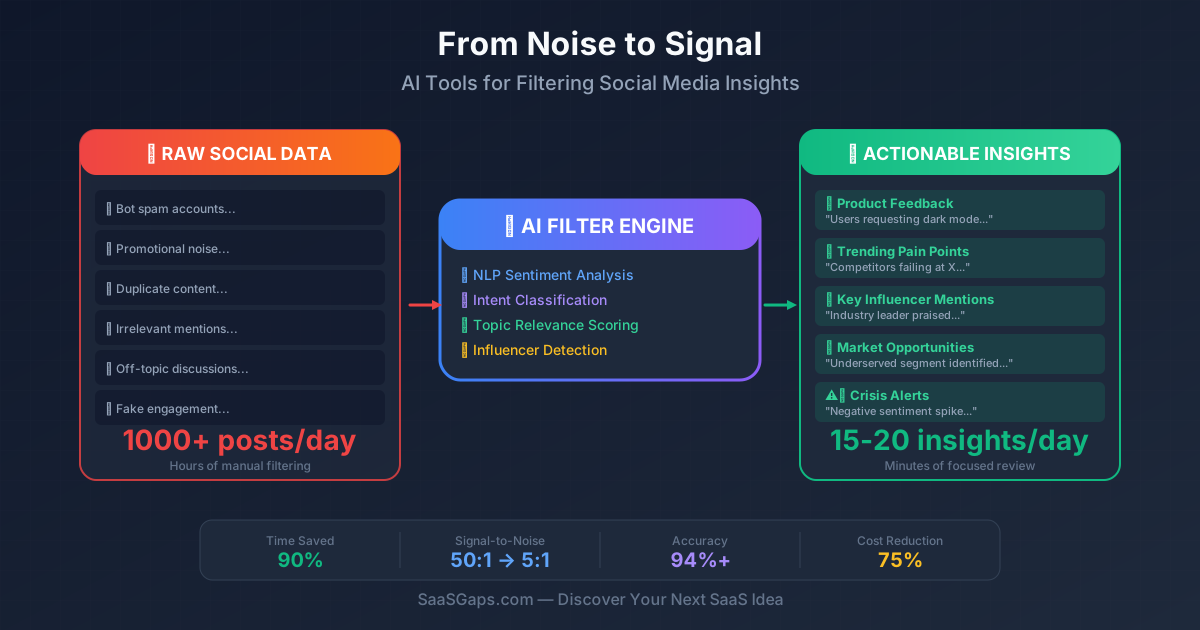
From Noise to Signal: AI Tools for Filtering Social Media Insights
Drowning in social media data? AI filters like Xeet.ai are turning hours of sifting into minutes of clarity. Here's how to implement them.
How to Automate Google Ads Customer List Uploads in 2026
Stop manual CSV uploads. Learn how to automate Google Ads Customer Match using Python, CRMs, and Google Sheets to boost Smart Bidding performance.
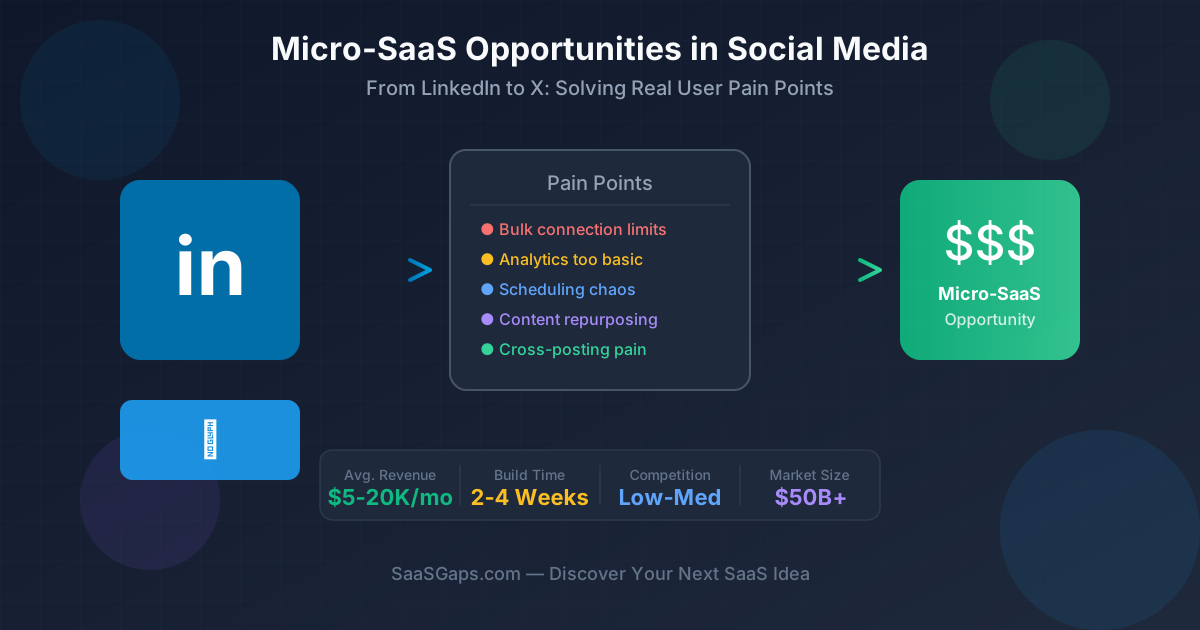
Micro-SaaS Opportunities in Social Media: Solving Pain Points from LinkedIn to X
Real user complaints across LinkedIn and X (Twitter): connection limits, InMail tracking, thread writing, analytics, and bookmark chaos—plus micro-SaaS MVP ideas.
Newsletter
Join the community
Subscribe to our newsletter for the latest news and updates