Keyword Research Chaos: Why TubeBuddy and VidIQ Disagree and How to Find the Truth
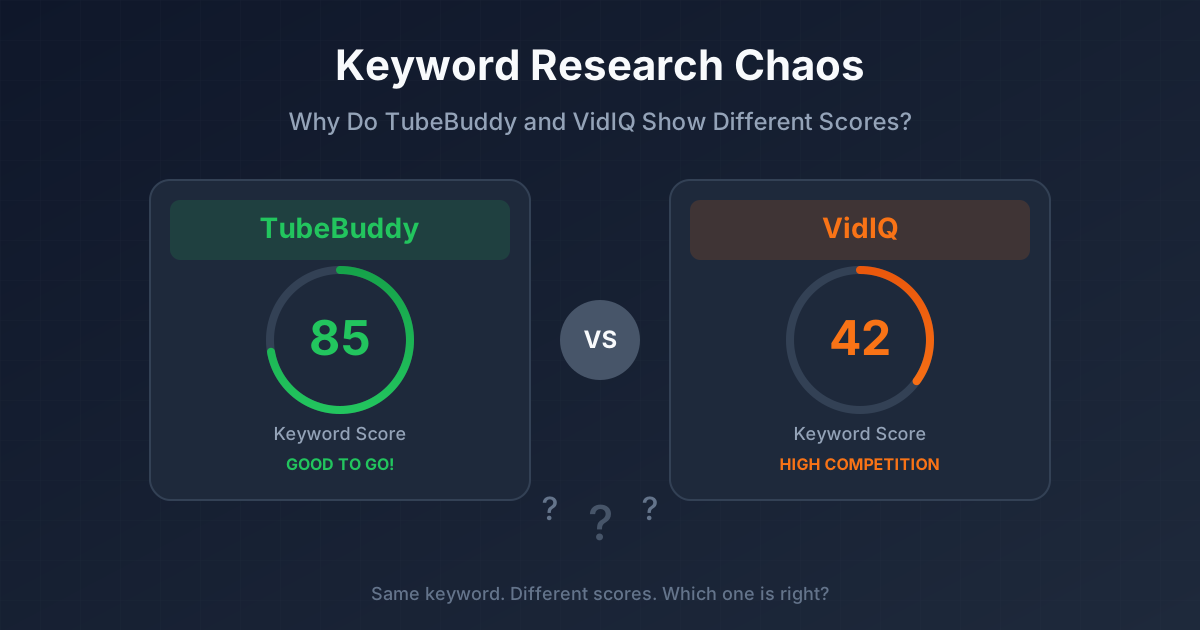
You found the perfect keyword. TubeBuddy gives it a score of 85. VidIQ says it's a 42. Which tool do you trust? Here's the truth about why they disagree and how to make better decisions.
You've been there. You spend an hour researching the perfect keyword for your next YouTube video. You type it into TubeBuddy, and the score lights up green—85 out of 100. Excitement builds. This is the one. Then, almost as a formality, you check VidIQ. The number stares back at you: 42. Your stomach drops.

Which tool is right? Did you just waste an hour? Should you trust the optimistic score or the pessimistic one? These questions plague YouTube creators every single day, and the confusion runs deep. I've seen this exact scenario play out in countless Reddit threads, YouTube comments, and creator communities. The frustration is real, and it's costing creators time, confidence, and potentially views.
The truth is both tools can be "right" in their own way, because they're measuring fundamentally different things. Understanding why they disagree—and more importantly, what to do about it—is the difference between keyword research that actually works and keyword research that just feels like productive procrastination.
The Same Keyword, Wildly Different Numbers
Let me paint a clearer picture of how dramatic these differences can be. Take a hypothetical keyword like "how to edit videos for beginners." TubeBuddy might show you a score of 78 with green indicators across the board. The weighted score, which factors in your specific channel's size and history, might be even higher. VidIQ, looking at the same keyword, could return a score of 35 with warnings about high competition.
These aren't small discrepancies. We're talking about one tool essentially saying "go for it" while the other says "maybe reconsider." For a creator trying to make data-driven decisions, this is maddening.
The discrepancy isn't a bug. It's not that one tool is broken or lying. The difference stems from fundamentally different philosophies about what makes a keyword "good"—and understanding these philosophies is the key to using both tools effectively.
How TubeBuddy Thinks About Keywords
TubeBuddy approaches keyword analysis with a channel-centric perspective. When you search for a keyword in TubeBuddy's Keyword Explorer, it doesn't just look at the general YouTube landscape. It considers your specific channel's ability to rank for that term.
This is why TubeBuddy shows you both an "unweighted" and a "weighted" score. The unweighted score reflects general opportunity—how much search volume exists versus how much competition there is. The weighted score adjusts this based on your channel's specific situation: your subscriber count, your video performance history, your niche authority, and other channel-specific signals.

The philosophy behind this approach makes intuitive sense. A keyword that's highly competitive in absolute terms might still be accessible to a channel that has already built authority in that niche. TubeBuddy tries to answer the question: "Can YOUR channel rank for this keyword?" rather than just "Is this keyword competitive in general?"
This channel-centric approach explains why two creators searching the same keyword in TubeBuddy might see completely different scores. A channel with 500,000 subscribers and a history of ranking well for similar content might see an 85. A brand new channel with 50 subscribers searching the same term might see a 45. Same keyword, different opportunities based on channel context.
TubeBuddy also tends to emphasize search volume in its scoring. If a keyword gets significant searches, TubeBuddy leans toward rating it favorably, even if competition is substantial. The logic: high search volume means high potential reward, and if your channel can compete at all, the upside justifies the effort.
How VidIQ Thinks About Keywords
VidIQ takes a more market-focused approach. When you analyze a keyword in VidIQ, the tool looks outward at the competitive landscape rather than inward at your channel's specific capabilities.
VidIQ heavily weights what it calls "Views Per Hour" or VPH metrics. This measures how quickly videos targeting a keyword accumulate views—a proxy for real demand. But VidIQ also factors in competition intensity more aggressively. If the top-ranking videos for a keyword come from channels with millions of subscribers and professionally produced content, VidIQ's score reflects that competitive barrier.
The result is scores that often feel more conservative. VidIQ is essentially answering: "How hard is this keyword to rank for, objectively?" It's less interested in whether your specific channel can compete and more interested in the overall difficulty of the terrain.
This approach has its own logic. VidIQ argues that understanding true competition levels prevents creators from wasting time on keywords they realistically can't win. A new channel targeting "Minecraft" might feel good seeing a high score in one tool, but VidIQ's lower score serves as a reality check: this is a brutally competitive space.
VidIQ also tends to be more sensitive to the authority of existing ranking videos. If the first page of results for a keyword is dominated by channels with 10+ million subscribers, VidIQ's algorithm significantly penalizes that keyword's score, regardless of search volume. The opportunity exists, but the barrier to entry is considered too high for most creators.
The Data Sources Differ Too
Beyond philosophical differences, the tools may literally be working with different data. Neither TubeBuddy nor VidIQ has direct access to YouTube's internal search volume data. They both rely on estimates derived from various signals: autocomplete suggestions, Google Trends data, third-party keyword databases, and proprietary scraping methods.
These estimates can diverge significantly. One tool might estimate a keyword gets 50,000 searches monthly while another estimates 30,000. Neither is "wrong" in the sense of making data up, but the underlying methodologies produce different numbers.
Competition metrics also vary. How each tool defines and measures "competition" isn't standardized. TubeBuddy might count the number of videos targeting a keyword and their average view counts. VidIQ might weight channel authority and engagement rates differently. These methodological choices cascade into the final scores.
The tools also update their algorithms at different times. YouTube's landscape changes constantly, and the tools' data refreshes on different schedules. A keyword that was competitive last month might have shifted, and one tool might reflect that change before the other.
Why Neither Tool Is "Wrong"
Here's the insight that changed how I think about this problem: TubeBuddy and VidIQ aren't competitors giving you the same answer with different accuracy. They're answering different questions.
TubeBuddy asks: "Given who you are, can you compete for this keyword?" VidIQ asks: "How competitive is this keyword in absolute terms?"
Both questions are useful. A complete keyword research strategy benefits from both perspectives. The channel-specific view helps you find realistic opportunities given your current position. The market-wide view ensures you understand what you're up against and don't develop unrealistic expectations.
The creators who get burned by keyword research aren't usually the ones using the "wrong" tool. They're the ones who take any single score as gospel truth without understanding what that score actually represents.

A Practical Framework for When Tools Disagree
After spending considerable time analyzing how successful creators navigate this, a clear pattern emerges. The best approach isn't choosing one tool over the other—it's using the disagreement as information.
When TubeBuddy scores high and VidIQ scores low, you're likely looking at a keyword with decent search volume but stiff competition. TubeBuddy's optimism reflects that there's opportunity if you can compete. VidIQ's pessimism reflects that the bar is high. For an established channel with relevant authority, this might be worth pursuing. For a new channel, proceed with caution or look for more specific long-tail variations.
When TubeBuddy scores low and VidIQ scores high, you've found something unusual—possibly a keyword with moderate search volume but surprisingly little competition. These can be hidden gems. The catch is that low competition sometimes means low demand, so verify that people are actually searching for this topic. Check Google Trends and look at related keywords to ensure you're not optimizing for a ghost town.
When both tools score high, you've potentially found a sweet spot. High opportunity combined with genuinely accessible competition. Don't celebrate too quickly though—verify by actually looking at the videos currently ranking. Sometimes tools miss nuances that human judgment catches.
When both tools score low, neither tool believes this is a good opportunity right now. Unless you have a strong strategic reason to pursue the keyword anyway (building a content library, establishing authority for future algorithm shifts), consider pivoting.
Beyond the Score: Manual Verification Steps
Here's what separates creators who consistently find good keywords from those who just chase scores: manual verification. No algorithm, no matter how sophisticated, catches everything that human judgment notices.
Search the keyword on YouTube and actually watch what happens. Look at the first 5-10 results. What channels are ranking? How large are they? How old are the videos? If the top results are all from channels 10x your size with professionally produced content from the last month, the competition is genuinely fierce regardless of what any tool says.
Pay attention to view velocity. A video from a small channel that got 100,000 views in two weeks signals that the keyword drives real traffic. A video from a massive channel that got 100,000 views suggests the keyword might just be piggybacking on existing subscriber bases, not search traffic.
Check the video titles and thumbnails. Are they well-optimized, or did these videos rank almost by accident? Poorly optimized competition is easier to beat than channels who clearly understand YouTube SEO.
Look at engagement patterns. Are viewers actually engaging with these videos, or are the view counts inflated with poor retention? YouTube's algorithm increasingly favors engagement quality, and keywords where existing content has weak engagement represent real opportunity.
Read the comments. Commenters often reveal what they were actually searching for, what the video did or didn't address, and what related topics they're interested in. This qualitative data doesn't show up in any tool's score but massively informs content strategy.
The Real Metric: Search Results Quality
One thing both TubeBuddy and VidIQ fail to measure effectively is search result satisfaction. If users search for a keyword and consistently don't find what they're looking for, that keyword represents massive opportunity regardless of competition scores.
You can detect this manually. Search the keyword and ask: "Do these results actually answer what someone searching this would want?" If the top videos are tangentially related, outdated, or poorly explain the topic, there's room for better content to rank.
I've seen creators build substantial audiences by targeting keywords that tools rated as competitive but where existing content was genuinely poor. The tools saw established videos with high view counts and flagged competition. What they missed was that viewers weren't satisfied—they were searching the keyword, clicking multiple videos, and not finding good answers. A better video, even from a smaller channel, can displace unsatisfying content.
This is also why "freshness" matters. Some keywords are evergreen, and videos from 2019 still rank fine. Others are time-sensitive, and users specifically want recent content. Tools don't always distinguish between evergreen and decaying content, but human review does.
Channel Growth Stage Changes Everything
Your channel's growth stage should dramatically influence how you interpret keyword research data. A strategy that works for a 10,000-subscriber channel can be completely wrong for a 100-subscriber channel, and vice versa.
Early-stage channels benefit most from low-competition keywords that TubeBuddy's unweighted scores or VidIQ's competition metrics identify. You won't win competitive battles yet, so don't fight them. Focus on keywords where you can realistically appear on the first page, even if search volume is modest. Getting any views from search establishes your channel's relevance and builds the watch time history that YouTube uses to evaluate your future videos.
Mid-stage channels can start reaching for keywords with moderate competition. Your channel has enough history that YouTube gives you a fair shot at ranking. TubeBuddy's weighted scores become more meaningful here because your channel context actually influences your ranking probability. Use both tools but lean into opportunities where TubeBuddy's channel-specific view is optimistic.
Established channels can compete for high-volume, high-competition keywords that both tools might flag as difficult for smaller creators. At this stage, you have authority, you have subscribers who boost initial view velocity, and you have a library of related content that signals relevance. The keyword landscape opens up, and your challenge shifts from "can I rank?" to "where should I focus limited production capacity?"
What the Tools Won't Tell You
Both TubeBuddy and VidIQ are silent on several factors that dramatically impact keyword strategy. Understanding these gaps prevents over-reliance on any tool.
Neither tool measures your content quality or production capability. A technically excellent video on a competitive keyword might outperform a mediocre video on a perfectly optimized keyword. If you're a strong creator, you can compete above your weight class. If your content is still developing, even perfect keyword selection won't compensate.
Neither tool understands your audience deeply. Keywords exist within niches, and your existing subscribers have expectations. Chasing a keyword that's technically optimized but irrelevant to your audience's interests can confuse the algorithm about what your channel is about, potentially hurting long-term growth.
Neither tool predicts YouTube algorithm shifts. What works today might work differently in six months. YouTube's search and suggestion algorithms evolve constantly, and historical data—which both tools rely on—is an imperfect predictor of future performance.
Neither tool accounts for external promotion. If you have an email list, social media following, or other traffic sources, you can drive initial views that boost search ranking regardless of what the keyword competition suggests. Creators with external audiences can take more competitive keyword risks than those relying purely on YouTube discovery.
The Creator Community Speaks
The frustration with conflicting keyword scores is universal. Browse any YouTube creator community, and you'll find threads asking this exact question: "TubeBuddy says X, VidIQ says Y, which do I trust?"

The experienced creators who respond have largely converged on similar advice. Use both tools as data points, not authorities. Verify manually. Trust your judgment about your niche. And most importantly, don't let keyword research paralysis prevent you from actually making videos.
One particularly insightful perspective I've seen: treat keyword tools like weather forecasts. They're useful predictions based on available data, but they're not guarantees. You wouldn't cancel a trip because one weather app showed 30% rain while another showed 10%. You'd check both, look outside, and make a judgment call. Keyword research works the same way.
Building Your Personal Research System
Rather than asking "which tool is better," the right question is "what research system works for me?" Here's a structure that incorporates both tools effectively.
Start with VidIQ's Keyword Inspector to understand the market landscape. What's the overall competition level? What does VPH suggest about demand? This gives you a reality check before you get emotionally invested in a keyword idea.
Then check TubeBuddy's Keyword Explorer for the channel-specific perspective. How does your channel's context change the picture? The weighted score tells you something VidIQ doesn't: whether your specific channel has a realistic shot.
If the tools disagree significantly, that's a signal to dig deeper. Don't just pick the more favorable score. Understand why they disagree. Is it a channel authority issue? A competition methodology difference? A data freshness problem?
Always manually verify promising keywords. Search them on YouTube. Evaluate the existing results. Read comments. Check publishing dates. This takes 5-10 minutes per keyword but catches issues that no tool surfaces.
Track your results over time. When you publish videos targeting specific keywords, note what the tools said and what actually happened. Did TubeBuddy's optimism prove justified? Was VidIQ's caution warranted? Your own historical data eventually becomes more valuable than any tool's prediction.
The Bigger Picture: Why This Matters
Keyword research tool confusion is really a symptom of a deeper challenge: YouTube success is genuinely complex, and no single metric captures what makes a video succeed.
Scores feel precise and authoritative. A number like 85 or 42 suggests scientific accuracy. But these numbers are simplifications of multifactorial reality. They're useful simplifications—better than guessing blindly—but simplifications nonetheless.
The creators who thrive long-term develop intuition alongside their tool usage. They learn what their audience responds to. They understand their competitive positioning. They recognize patterns that tools miss. The tools accelerate this learning; they don't replace it.
If you're spending more time agonizing over conflicting scores than actually creating content, the tools are hurting more than helping. The best video is the one that gets made. An imperfectly optimized video that exists beats a perfectly optimized video that stays in planning forever.
Making the Decision
So you're staring at conflicting scores. TubeBuddy says go. VidIQ says stop. Here's the decision tree I'd recommend.
First, is this keyword strategically important regardless of scores? If it's central to your content strategy, essential for your audience, or important for establishing your channel's identity, competition metrics matter less. Make the video. Do it well. Accept that ranking might take longer.
Second, do you have production capacity to spare? If you're choosing between multiple keywords and have limited time, lean toward opportunities where both tools agree or where manual verification suggests genuine opportunity.
Third, what's your risk tolerance? Competitive keywords are higher variance—they might rank well and deliver substantial views, or they might languish in obscurity. Less competitive keywords are lower variance—more predictable but with smaller upside. Match your keyword selection to your current channel goals.
Finally, when in genuine doubt, test. Make a video. See what happens. Real data beats predicted data. If the video underperforms, you've learned something concrete about your channel's competitive position. If it overperforms, you've found a gap in the tools' models that you can exploit again.
What Successful Creators Actually Do
After observing numerous successful YouTube channels across different niches, patterns emerge in how they handle keyword research.
They spend less time than you'd expect on keyword tools. Successful creators typically have a quick keyword research process—10-15 minutes, not hours. They check the tools, do a quick manual verification, make a decision, and move on. The time savings go into actually making better content.
They rely heavily on their own historical data. After publishing 50-100 videos, you have a massive dataset: what keywords you targeted, how they performed, and what surprised you. This personal data, specific to your channel and niche, often outperforms generic tool predictions.
They use tools for idea generation more than validation. Instead of starting with a video idea and hoping the tools validate it, they browse keyword suggestion features to discover topics they hadn't considered. The tools surface demand they can meet, rather than testing demand for ideas they already have.
They're comfortable with uncertainty. Every video is, to some extent, an experiment. Successful creators accept this. They make educated guesses, execute well, and iterate based on results. The need to "know" before publishing is a productivity killer they've learned to overcome.
Your Next Steps
If you've been paralyzed by conflicting keyword data, here's what I'd suggest doing this week.
Pick a video topic you're genuinely excited about. Passion matters more than optimization for most creators.
Run it through both TubeBuddy and VidIQ. Note the scores without judging them yet.
Manually search the keyword on YouTube. Spend 10 minutes actually looking at what ranks.
Make a decision and commit. If the opportunity looks reasonable, make the video. If the competition looks insurmountable, find a more specific angle or different keyword variation.
After publishing, track what happens. Did you rank? Did you get search traffic? Were the tools' predictions accurate?
Repeat this process for your next several videos. You'll quickly develop intuition that supplements the tools.
The keyword research tool landscape is just one example of how YouTube creators face imperfect information and conflicting signals. Navigating this uncertainty successfully—finding the truth amid the noise—is a skill that compounds over time.
This kind of research challenge is exactly why we built SaaSGaps. We aggregate signals from across social media, filtering noise to surface validated opportunities—whether that's SaaS ideas with proven demand or market gaps that tools alone don't catch. The same principle applies: multiple data sources, manual verification, and pattern recognition beat any single metric.
Get weekly validated opportunities →
The tools will never agree perfectly. The scores will always conflict sometimes. But armed with understanding of why they disagree and a framework for navigating the disagreement, you can make keyword research work for you instead of against you. The truth isn't in either tool's score. It's in the synthesis of both, verified by your own judgment, and ultimately tested by what happens when you hit publish.
Author

Categories
More Posts
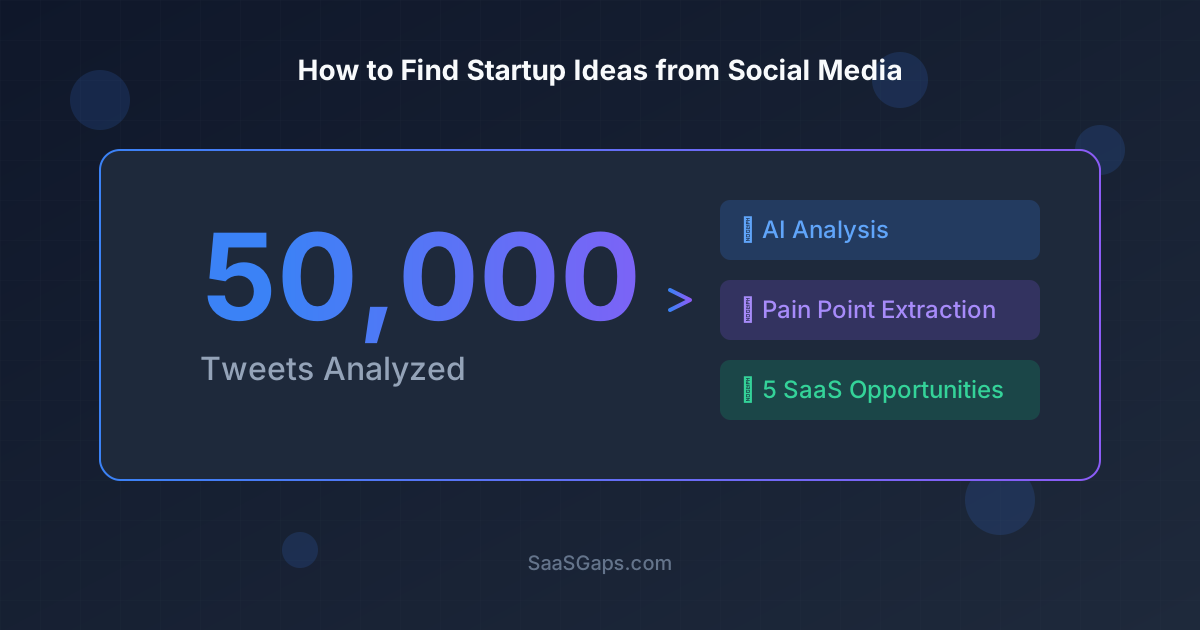
How I Monitored 50,000 Tweets and Discovered 5 SaaS Opportunities
A deep dive into using AI to analyze social media complaints and uncover validated micro-SaaS ideas that real users are willing to pay for.

Step-by-Step: Add Stripe Checkout to Your Next.js App for SaaS Monetization
Monetize your SaaS fast! This guide shows you how to integrate Stripe Checkout into your Next.js app with code examples and best practices.
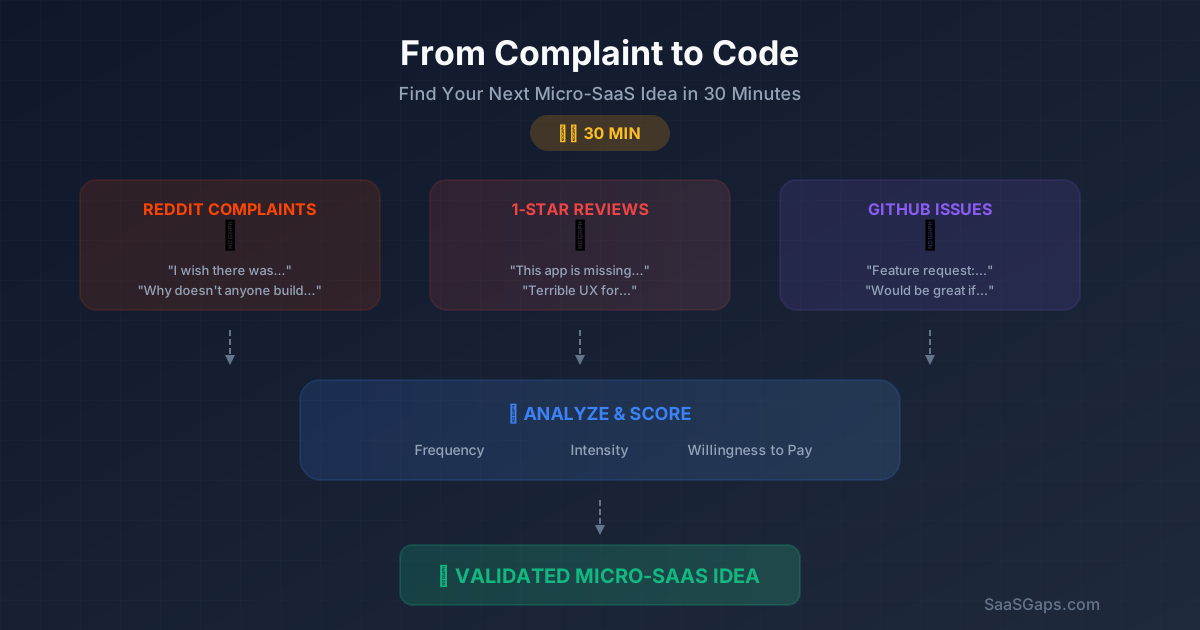
From Complaint to Code: How to Find Your Next Micro-SaaS Idea in 30 Minutes
Stop brainstorming in a vacuum. Learn the practical 30-minute framework for mining Reddit complaints, 1-star app reviews, and GitHub issues to discover validated micro-SaaS ideas.
Newsletter
Join the community
Subscribe to our newsletter for the latest news and updates