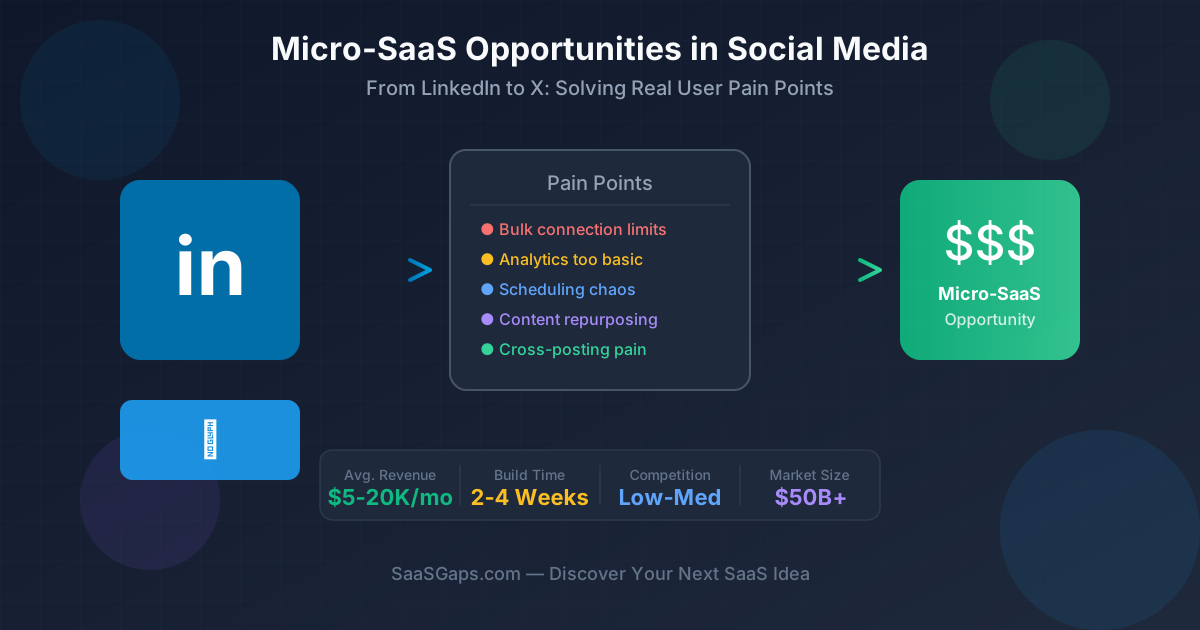
Micro-SaaS Opportunities in Social Media: Solving Pain Points from LinkedIn to X
Real user complaints across LinkedIn and X (Twitter): connection limits, InMail tracking, thread writing, analytics, and bookmark chaos—plus micro-SaaS MVP ideas.
The indie developer community has been buzzing about social media tools lately, and for good reason. Every day, creators, marketers, and business professionals publicly complain about the same frustrations across LinkedIn, X, Instagram, and other platforms. These complaints aren't just noise—they're product roadmaps waiting to be built.

I spent the past few weeks analyzing thousands of posts across social platforms, developer forums, and indie hacker communities. The patterns that emerged paint a clear picture of where the opportunities lie. What follows isn't speculation—it's a breakdown of real pain points expressed by real users, along with practical MVP ideas and monetization strategies that could work for solo developers.
The Social Media Tool Landscape Is Fragmented
Here's something interesting about the current market. Buffer, Hootsuite, and Sprout Social dominate enterprise social media management, but they've left massive gaps in the SMB and creator segments. Their pricing starts at $99-299 monthly—way too expensive for freelancers, small agencies, and individual creators who just need one specific thing done well.
This fragmentation creates perfect Micro-SaaS conditions. Instead of building another "all-in-one" platform nobody asked for, you can pick a single pain point and solve it brilliantly. The market rewards focus.

Pat Walls from Starter Story put it best in a recent post that got 84,000+ views: "Simple strategy to make $20K/month with a micro saas: Don't build for 'anyone.' Charge 76% less than your $1B competitor." That philosophy applies perfectly to social media tools.
LinkedIn: The Untapped Goldmine
LinkedIn might be the most underserved platform for third-party tools. The professional network has 900+ million members, yet its native features remain surprisingly limited. Sales teams, recruiters, and content creators all hit the same walls.
The connection request limit is perhaps the most complained-about restriction. LinkedIn caps weekly connection requests to prevent spam, which makes sense from their perspective. But for legitimate sales professionals trying to build relationships, this creates genuine frustration. They're forced to manually track their request quota, time their outreach carefully, and often miss opportunities because they've hit invisible limits.
A simple tool that tracks connection request usage, predicts when limits reset, and optimizes outreach timing could easily command $19-49 monthly from sales professionals. The math works because one additional closed deal pays for years of subscription. Integration with existing CRM systems would make it even stickier.
InMail tracking represents another pain point. LinkedIn's premium feature costs serious money, yet users frequently complain that read receipts don't work reliably, response analytics are shallow, and there's no way to A/B test message templates. A Chrome extension that enhances InMail with proper tracking, template management, and conversion analytics would attract recruiters and salespeople who already pay for premium accounts.
Content creators on LinkedIn face their own struggles. The platform's native scheduling is basic at best—limited time slots, no content calendar visualization, poor mobile experience. More importantly, there's no way to repurpose successful posts automatically or get notified when engagement spikes so you can respond promptly. A focused LinkedIn content assistant could handle all of this for $15-29 monthly.
X (Twitter): Where Creators Build in Public
The indie developer community lives on X, which means the platform generates particularly vocal feedback about tool gaps. Creators are literally building products and documenting the journey in real-time, so when something frustrates them, they tweet about it immediately.
Thread creation remains surprisingly painful despite being one of Twitter's signature content formats. The native interface makes it easy to lose your place, accidentally publish incomplete threads, or mess up the formatting. Third-party tools exist but often feel clunky or require too many clicks. A minimal, keyboard-first thread composer with version control (imagine git for threads) would attract power users who publish regularly.
Marc Lou, one of the most followed indie hackers, recently launched DataFa.st—an analytics tool specifically for founders. His approach illustrates the opportunity: instead of competing with generic analytics platforms, he built something laser-focused on metrics that matter to startup builders. The response was immediate because he solved a problem he personally experienced.
Engagement analytics on X frustrate users because the native tools show vanity metrics without actionable insights. Which tweet formats perform best? What posting times drive the most engagement for your specific audience? Which followers actually engage versus just following? A tool that answers these questions with clear recommendations could charge $9-19 monthly to serious creators.
The bookmark organization problem comes up constantly. X's bookmark feature is essentially a dumping ground with no folders, no search, and no way to resurface content when you actually need it. People save hundreds of useful threads and never find them again. A bookmark manager with tagging, full-text search, and AI-powered categorization addresses a surprisingly acute need.
Cross-Platform: Where the Biggest Opportunities Hide
The most lucrative Micro-SaaS opportunities often span multiple platforms. Creators and businesses rarely focus on just one social network—they maintain presence across LinkedIn, X, Instagram, TikTok, and more. Managing content across all of them creates exponential complexity.
Content repurposing is the clearest example. A long-form YouTube video contains material for dozens of short clips, multiple tweet threads, several LinkedIn posts, and endless Instagram stories. Most creators do this manually, spending hours reformatting the same content. Tools like Repurpose.io have proven the market exists, but there's room for more focused alternatives that do one conversion really well (say, YouTube to Twitter threads with AI) rather than trying to cover everything.
Unified analytics across platforms would save social media managers significant time. Right now they export CSVs from each platform, merge them in spreadsheets, and try to spot patterns manually. A dashboard that pulls metrics from LinkedIn, X, Instagram, and others—then highlights cross-platform patterns—addresses a real workflow problem. The target market (agencies and social media managers) has budget and feels the pain daily.

AI-powered content generation specifically for social media represents a fast-growing niche. Generic AI writing tools like ChatGPT and Claude work, but they require careful prompting to match platform-specific conventions. A tool that understands LinkedIn's professional tone differs from X's casual voice, that knows optimal post lengths for each platform, and that can adapt a single piece of content across formats—that's genuinely useful.
Practical MVP Approaches
Building a Micro-SaaS for social media follows predictable patterns. The best MVPs share certain characteristics that make them achievable for solo developers in 2-4 weeks.
Browser extensions offer the fastest path to market for LinkedIn and X tools. You can enhance the native platform experience without needing API access (which both platforms have restricted significantly). Chrome's extension ecosystem handles distribution, and users already trust the model. A well-designed extension that solves one specific problem can reach profitability with just a few hundred paying users.
The pricing sweet spot for individual tools sits between $9-29 monthly. Lower than that and you need too much volume to be sustainable. Higher than that and you're competing with full-featured platforms that offer more. Within this range, conversion friction is minimal for professionals who experience the pain daily.
Free tiers should be generous enough to demonstrate value but limited enough to convert serious users. Time-based limits (14-day free trial) work for some products. Usage-based limits (10 scheduled posts free, then pay) work for others. The key is matching the limit to natural usage patterns—you want free users to hit the upgrade prompt at the moment they're getting maximum value.
Integration matters more than feature count. A LinkedIn tool that syncs with HubSpot, Salesforce, and common CRM systems will beat a feature-rich tool that exists in isolation. Social media tools that export to Notion, Airtable, and Google Sheets reduce friction for users who live in those ecosystems.
Monetization Strategies That Work
Subscription pricing remains the default for social media tools, but the specifics matter. Monthly plans attract users who want flexibility. Annual plans improve cash flow and reduce churn. Offering both, with a meaningful discount for annual (20-30% off), optimizes for different buyer preferences.
Lifetime deals can jumpstart growth but require careful calculation. AppSumo-style launches generate quick cash and early users, but those users often contribute less long-term revenue and sometimes demand disproportionate support. For Micro-SaaS targeting professionals, I'd recommend avoiding lifetime deals unless you need the initial validation badly.
Usage-based pricing makes sense for certain tool categories. If you're building an AI content generator, charging per output (or per API call) aligns cost with value delivered. If you're building an analytics dashboard, charging per connected account works well for agencies managing multiple clients.
Affiliate partnerships with larger platforms create additional revenue streams. Many social media tools offer affiliate programs—if your tool complements rather than competes with them, you can earn commissions while adding value for users.
Finding Your Specific Angle
The opportunities outlined above are starting points, not final destinations. The best Micro-SaaS products come from founders who experience the pain themselves. If you manage LinkedIn content for clients, you know which specific steps waste the most time. If you build in public on X, you've felt the friction of engagement tracking.
Spend time in communities where your potential users gather. The Indie Hackers forum, specific subreddits like r/SaaS and r/Entrepreneur, Twitter spaces about building products—these conversations reveal pain points that don't show up in formal market research. Pay attention to phrases like "I wish there was," "why doesn't anyone build," and "I'd pay for."
Validate before building. A landing page describing your proposed solution, promoted in relevant communities, will tell you whether demand exists before you write a line of code. If you can collect 50+ email signups in a week, you're probably onto something. If crickets, iterate on the concept or move on.
The social media tool space rewards speed and focus. Large platforms move slowly and serve broad markets. As a solo developer, you can ship in weeks what would take them months. You can serve niches they'd never prioritize. That asymmetry is your advantage—use it.
Getting Started This Week
Pick one platform where you personally experience frustration. LinkedIn if you're in sales or recruiting. X if you're building in public. Instagram if you're a content creator. The platform you use daily is the one where you'll best understand user needs.
Identify the single most annoying workflow you repeat. Not a vague category of problems—one specific sequence of clicks, exports, or workarounds that wastes your time repeatedly. That's your MVP scope.
Build the simplest possible solution. A Chrome extension, a simple web app, even a Zapier integration. Something you can ship in a weekend to validate the core concept.
Price it from day one. Even if it's $5 monthly, charging money immediately filters for serious users and validates willingness to pay. Free products attract very different feedback than paid ones.
This is exactly the kind of opportunity discovery that SaaSGaps automates. Every week, we analyze thousands of social media posts to identify validated product opportunities—real user complaints with clear signals of willingness to pay. Instead of doing this research manually, you can have curated opportunities delivered directly to your inbox.
Subscribe to get weekly validated SaaS ideas →
The social media tool market isn't going anywhere. Platforms will continue evolving, users will continue complaining, and focused Micro-SaaS products will continue finding profitable niches. The question is whether you'll be building those solutions or just reading about others who did.
Want more validated SaaS ideas delivered weekly? Join the SaaSGaps newsletter and get curated opportunities based on real user pain points.
Author

Categories
More Posts
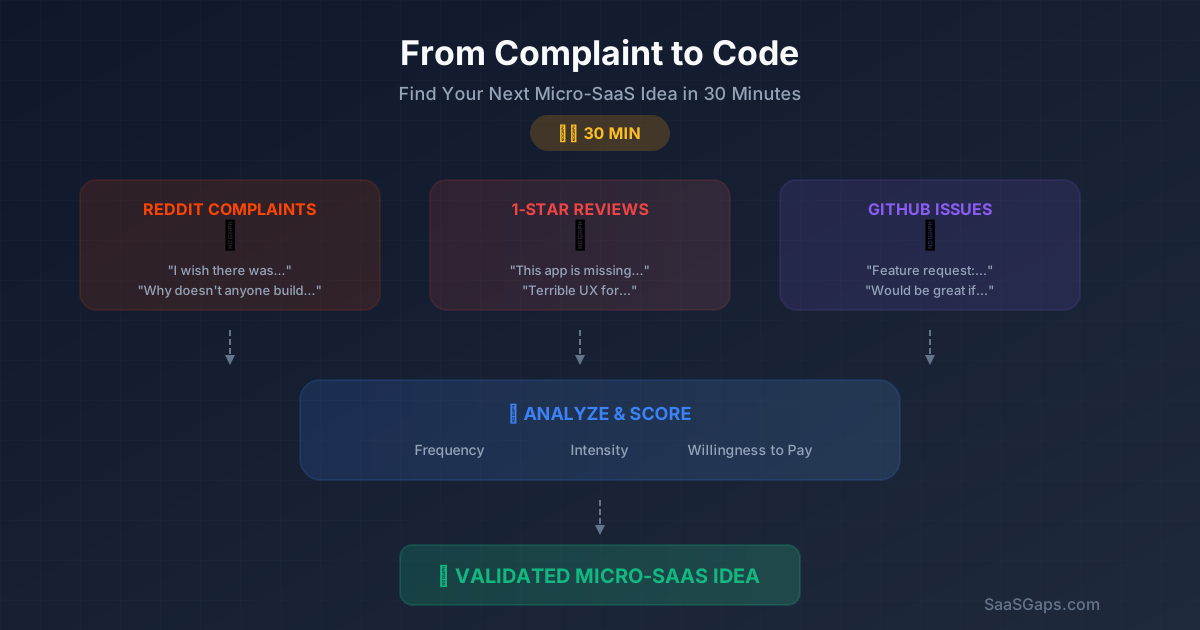
From Complaint to Code: How to Find Your Next Micro-SaaS Idea in 30 Minutes
Stop brainstorming in a vacuum. Learn the practical 30-minute framework for mining Reddit complaints, 1-star app reviews, and GitHub issues to discover validated micro-SaaS ideas.
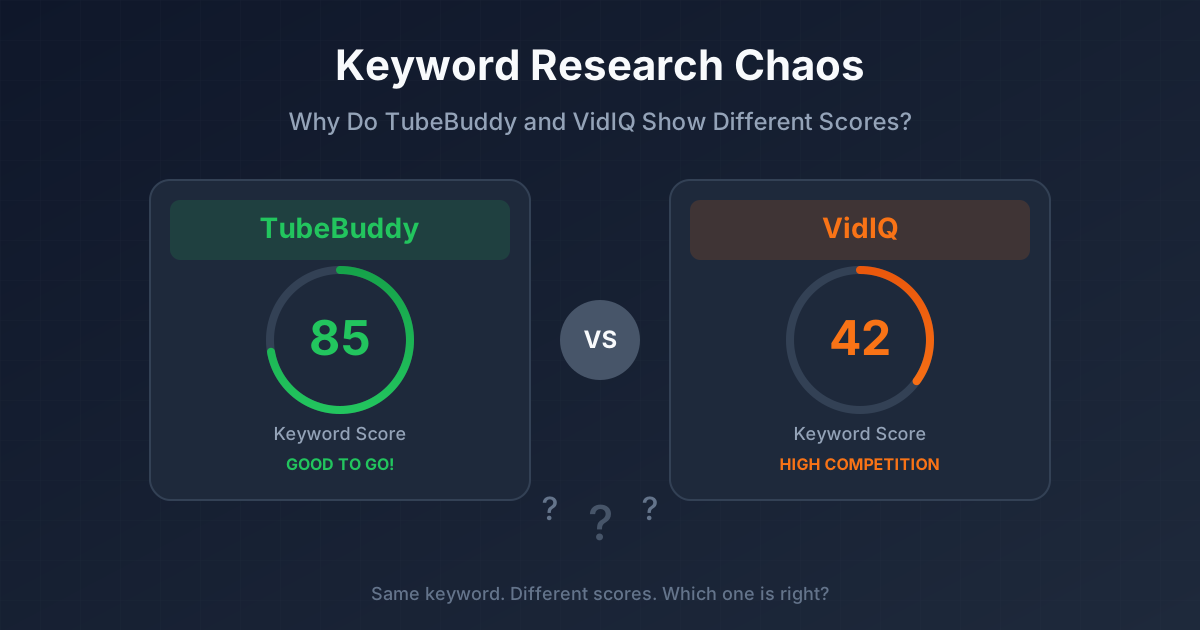
Keyword Research Chaos: Why TubeBuddy and VidIQ Disagree and How to Find the Truth
You found the perfect keyword. TubeBuddy gives it a score of 85. VidIQ says it's a 42. Which tool do you trust? Here's the truth about why they disagree and how to make better decisions.
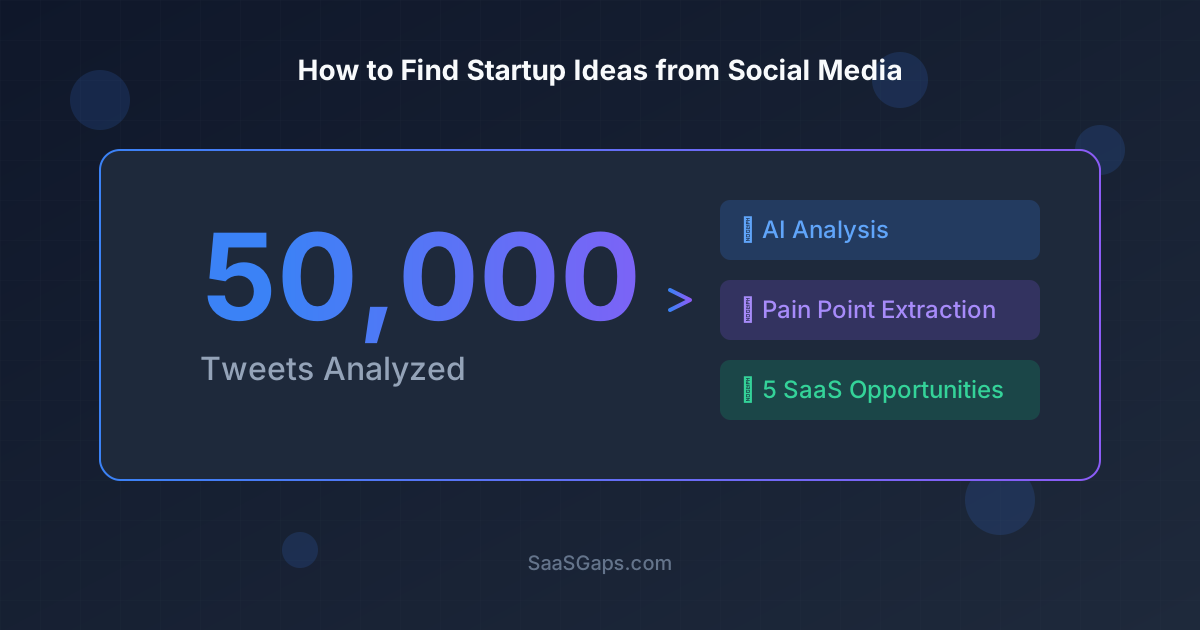
How I Monitored 50,000 Tweets and Discovered 5 SaaS Opportunities
A deep dive into using AI to analyze social media complaints and uncover validated micro-SaaS ideas that real users are willing to pay for.
Newsletter
Join the community
Subscribe to our newsletter for the latest news and updates